
Max Dashú
It’s difficult to define “shaman,” because it is culturally variable in so many ways, but we need a basic general description. I see “shaman” as belonging to a continuum of many names and roles: medicine woman, oracle, prophetess, diviner, dreamer; priestess, raindancer, communicant with ancestors, deities, Nature spirits; trance-dancer, shapeshifter, spirit-rider, cosmonaut. Countless descriptions show ancient priestesses engaging ecstatic incantation, sacred dance, and entranced states. Thus the Cappadocian priestesses of an Anatolian goddess fire-walked across burning coals without being burned. Thus the temple dancers of ancient Egypt with their sistra and hand-drums, the
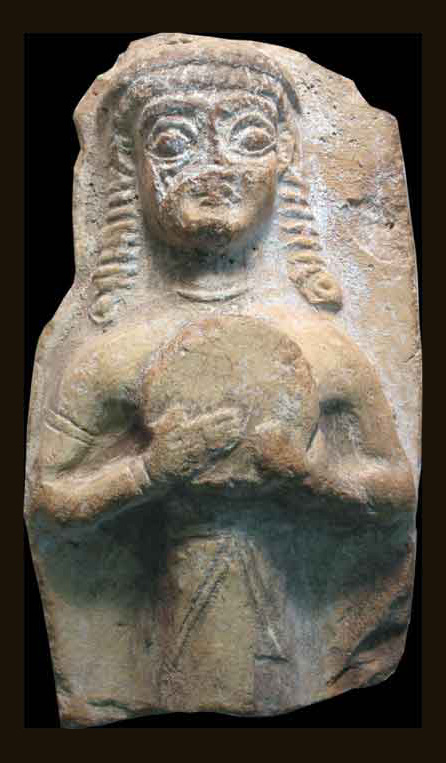
devadasis of India, the Canaanite qadeshot, the Peruvian priestesses who are depicted dancing and drumming. The rain shrine priestesses of Malawi with their python spirits and sacred pools were shamans by any definition of the term.
This shamanic background is why “priestess” calls up ecstatic associations that authoritarian religions regard as illicit and even demonic, and why so many of these religions excluded women from priesthood. Some went so far as to bar women from the altar, from temples or their inner sanctuaries, or from other shrines. The patriarchal lens has also twisted interpretation of sacramental dance and entranced spirit mediums, claiming that they exhibit the “natural,” allegedly “passive” province of women (and queers, and colonized peoples, and other Others). Most notoriously, these doctrines have recast European witches in the mold of magical evildoers—although as late as the 1400s the British were referring to a prophetic woman as The Witch of Eye (an English town).

Shamanism is a subject pervaded by political ramifications, because it represents direct spiritual power, energy that can not be controlled by man-made hierarchies or ranked social systems. It represents contact with Chaos in its original sense of the primordial Vastness, as well as its quite recent scientific sense of quantum physics and meteorology. Shamans connect with the core of being, the whole of beingness, the Source of wisdom and transformative power. This represents a threat to oppressive social orders which set certain classes of people (men, whites, dominant classes, settlers, heterosexuals) over Others. Shamanic cosmologies and ceremonies are also considered a threat, because they emphasize relatedness and delve into the ineffable, timeless, vast cycles of creation and destruction.

No hegemony can withstand that primal power, and so there is a long history of repression. It accounts for the U.S. outlawing and persecuting American Indian religions and why, having militarily defeated the Plains Indians, it was so threatened by the Ghost Dance. Why Chinese mandarins destroyed shrines of the Wu; why European men, with all their laws oppressing women, still feared the witches; and why they feared African Santería, Lucumí, Vodou and Candomblé, and banned the drum in the U.S. slave states. All these categories of shamanic culture, sacramental dance, altered states of consciousness, continue to be feared, demonized — and attacked.

I describe a shaman as someone who receives a calling to commune with spirit / deities / ancestors, who enters ecstatic, unified consciousness. This may come spontaneously or at will by drumming, rattling, chanting, dancing or rhythmic breathing and movements; by singing power songs revealed in visions, dreams or other portal experiences; by fasting, going into wilderness or to other sacred places, calling, crying, and singing; and sometimes, by consuming sacred mushrooms or other sacred plants, such as the daturas and other (often poisonous) herbs.
The shaman often undergoes an initiatory illness, a near-death experience, an attack by a tiger or bear, or other traumatic event that becomes a gateway to transformation. These events act as a trigger for transformation, as the shaman breaks through and overcomes. Often this experience is described as being consumed or dismembered or boiled, after which she is reconstituted and reconfigured as a shaman, sometimes with a new bone, crystal or other powerful object inserted into her body. Or she experiences a spontaneous breakthrough in which vision and power flood through her, a direct selection by Spirit (which usually cannot be refused).
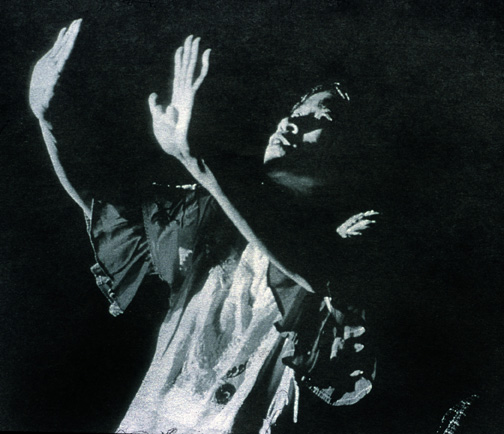
During her initiatory process, the shaman learns to access profound and exalted states of consciousness. Her spirits, deities, orishas, and very commonly, a shaman-ancestor, teach her through dreams, lucid visions, omens and energetically-charged experiences. She also frequently learns from other shamans in the community, being formally or informally trained by them, sometimes for years. This spiritual and ceremonial education often follows a recognized series of spirit sickness, signs or dreams. There is often a formal initiation, or the shaman may simply begin to gain recognition from the community based on her practice.
Counter to the modern market-driven shaman-fad, the shaman is chosen by the spirits, not self-selected. Initiation cannot be purchased, and boasting is a sure sign of pretense. Instead of self-indulgence and ego-boosting, the medicine woman puts in intensive effort, sacrifice, hardship, and suffering. This is true of any gender. I’ll never forget a video where Credo Mutwa explained to a rather conceited white guy that Zulu people do not seek out this path voluntarily, because they know how difficult it is, and that it involves sacrifice. This principle is alien to marketplace shamanism. Service to the community is part of the picture, though solitariness is paradoxically common too.
The classic Siberian shaman “rides” her drum or staff (often called a “horse”) into deep consciousness. She ascends the World Pillar or Tree which connects all the planes of the upper, middle, and lower worlds, and is able to travel through all the worlds. This idea of the shamanic pillar as a road of spirits is widespread, from the Peach Tree of Immortality in the mountain garden of Xi Wangmu in China to the central pillar of the Haitian vodou sanctuary, along which the loas descend and ascend. Countless other examples exist. These journeys are also described as flight, sometimes on the back of animal helpers, or as riding a spirit boat.
The shaman often paints the drumhead with images of her spirit helpers, her personal visions and power symbols. These drum paintings can be cosmic maps with the directions, the realms of humans and spirits, the various planes (often three) figured upon them. Like all sacred objects, these drums are consecrated, and in some places their spirits are fed with offerings.
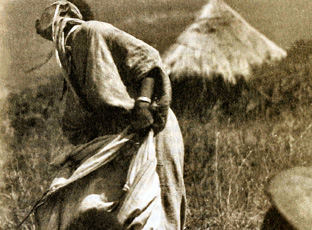
In other traditions, the spirit-journey-inducing instrument can be the rattle, shekere/calabash, clapping sticks, stamping tubes, or sounding the voice alone. This is accompanied by rhythmic movement, trembling, shaking the limbs, rubbing, whirling; rhythmic chanting or breath-huffing with sustained concentration. All this involves vibration, breath, dance. Shamans also carry out a diverse spectrum of ritual acts: washing, anointing with sacred substances (red ochre, white clay, pollen, turmeric, essential oils or fats), touching and brushing and sweeping with stones, eggs, herb bundles, burning of leaves, resins or other incense, or consuming stimulating substances (such as ginger in Indonesia and the Southern Pacific) or entheogenic plants.
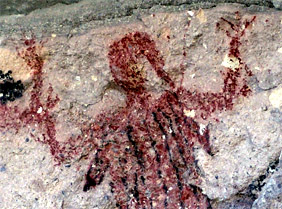
It all boils down to praying with the body, through the body, in order to deepen and unify consciousness. In medical terms we could say that sacred dance, chanting, and drumming activates all parts of the brain, entrains with the heartbeat, oxygenates the blood, and affects hormonal secretions. But all this describes only the physiological aspect of what is happening on multiple levels.
What shamanism does, in my view, is align body and soul, mind and spirit, into a state of full awakened consciousness. The shaman is healed by coming into awareness of old traumas, of stuck and trapped energies, and learning to release them. She washes them away, often literally by immersion in living water (this is the Hebrew wisdom of the mikveh, before patriarchal laws of uncleanness entered in). A modern Japanese prophetess who underwent a sudden revelation spent the next fifteen days pouring cold water over her head. (This repeated immersion in often-cold water has older precedents in Japan.) Modern industrial thinking regards these as acts of madness, but for someone undergoing a kundalini surge, they are an eminently sane response, and a liberatory process of clearing and awakening.

The elements enter in, not only symbolically as body/soul/mind/spirit, but actually, as earth, water, air and fire (plus ether, in some cosmologies). The elements have transformative powers, in the hot steam of the sweat bath, the cool paste of sandalwood on the skin, fanning with feathers or leaf-bunches, or by extended gazing into fire (or clouds, rivers, wind in the trees). Entering into this wisdom-awareness, what the Haudenosaunee call the One Good Mind, leads to understanding the language of birds, of animals and plants, the essence of stones. It is Nature-based wisdom.
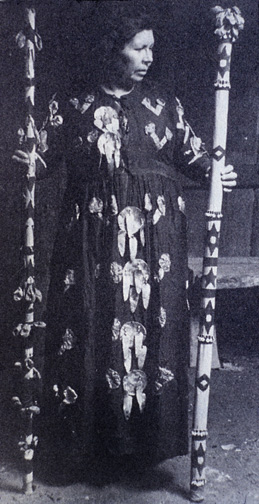
This is just a really the broadest of summaries. There’s so much more: consecration, spiritual philosophies, the spirit-names and arcane languages, sacred tools and regalia, flight, animal doubles or allies. Watch this film Pomo Shaman (it streams online* from the link) which gives far more understanding than any description. It’s about the Kashaya Pomo Dreamer Essie Parrish, who was also known by the title Yomta (“Song”), recognizing her as a wisdom-bearer. In this 1953 recording, she tells us about her medicine in her own words, and shows us its pure, sacred essence.
Copyright 2010 Max Dashu
*Mac users: you need Windows Media Player to run this. Search for Flip4Mac for your OS and download, that should enable you to see Pomo Shaman. It’s worth the trouble, one of the most moving films I’ve ever seen.
Now fundraising for a new movie, Woman Shaman: The Ancients. Learn more, see the trailer and contribute here:
You must be logged in to post a comment.