
by Max Dashu
All the school and media emphasis on European history barely grazes huge areas, such as women in rock art. Spain has some stunning examples of women dancing in groups, such as this rock shelter mural at the site Moriscas III.

They dance with their arms raised in a forest setting. Helechel region of Badajoz, Extremadura, western Spain. (Here again i’ve colorized a B&W drawing and added a rock background.) Dating is difficult, anywhere between the Mesolithic and the Bronze Age.

Here again the drawings are very rough, but clearly show women dancing with raised arms, who appear to be wearing feathers or fronds on their head.

Not sure if this is from Knossos or some other temple/palace. The brownish areas are the original surviving painting; all the rest is a reconstruction. The theme of female dancers is repeated in ceramic art and in the legends of Ariadne, priestess of the Labyrinth in Knossos.

In the ancient Aegean many clay and stone assemblages of women dancing rounds have been found, this one from Palaikastro, Crete. The woman in the center is dancing with a serpent, a shamanic theme frequently found in Cretan and Mycenaean art. This sculpture is centuries later than the classic Cretan art, created after the Greek conquest of the island, yet shows the persistence of old cultural patterns.
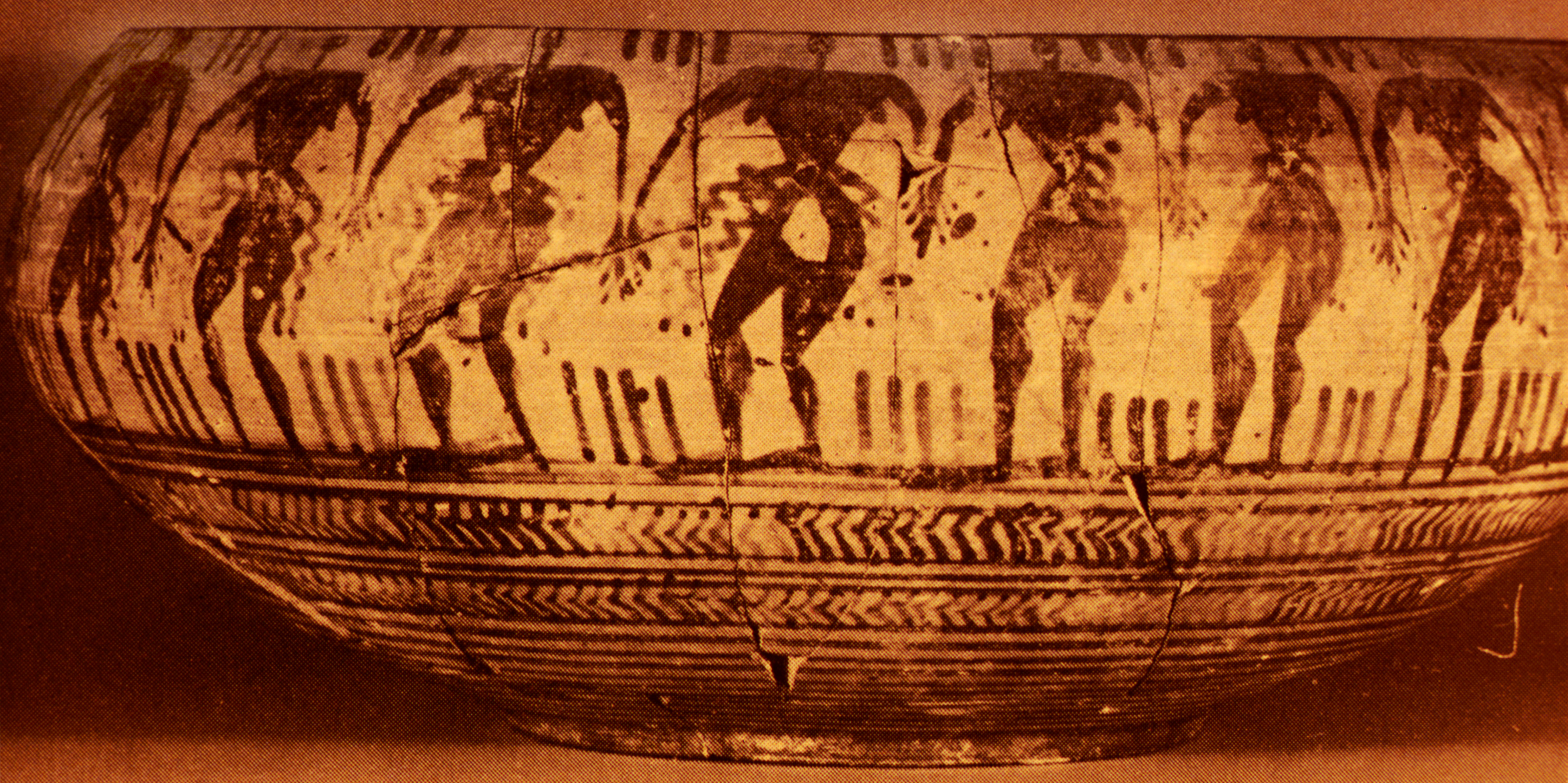
Barebreasted women dancing naked with leaf skirts is not what most people envision when they think of Europe, still less what we have been taught about Greece. This bowl dates from the Archaic/Geometric period, circa 750 bce. See more painted ceramics at http://www.suppressedhistories.net/Gallery/greek/geometric.html and the following page, linked at bottom.
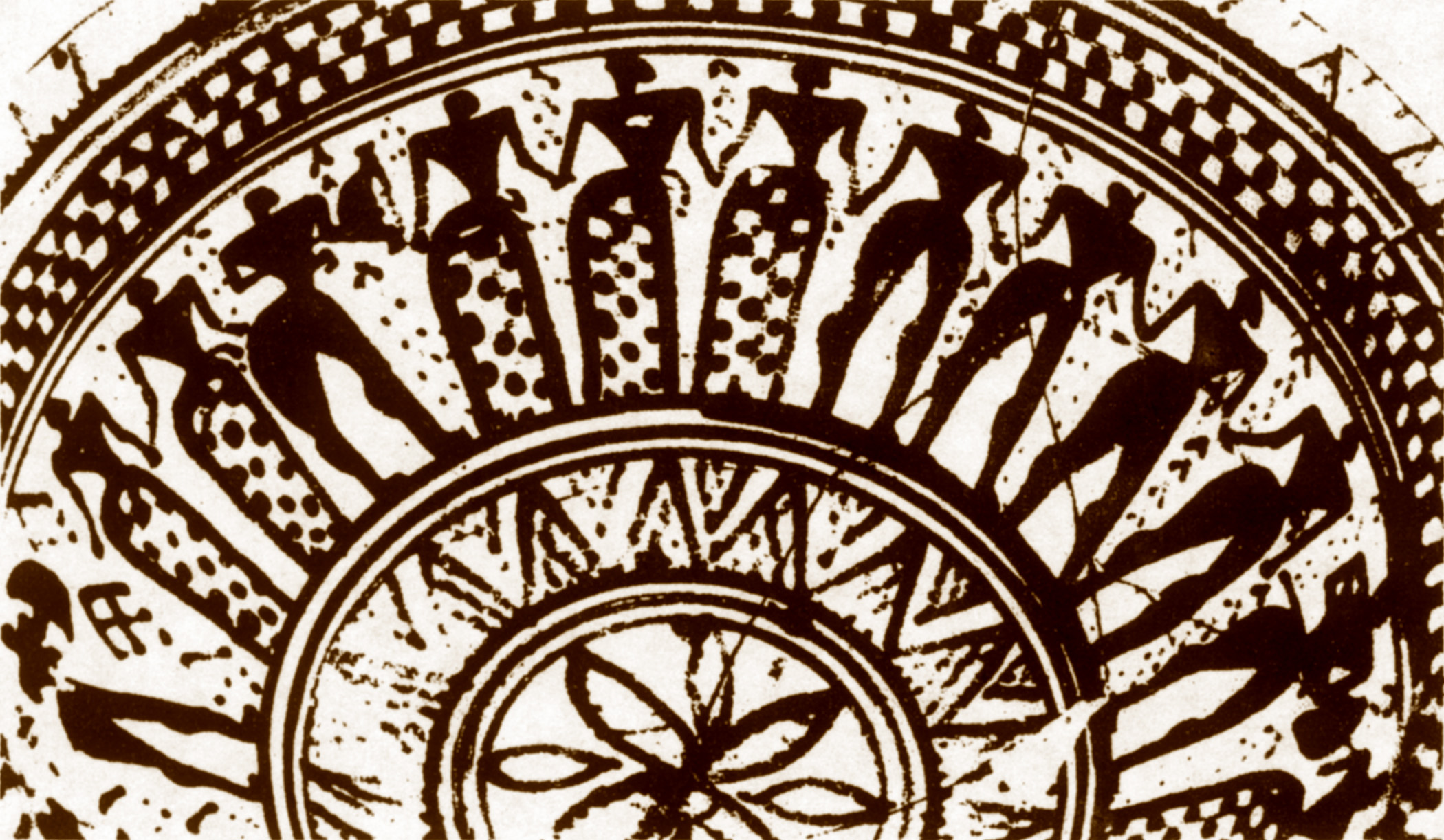
This Archic / Geomoetric style shows Libyan influences at times, most dramatically in this magnificent round dance of women and men. I’ve been calling attention to this Libyan connection for some time, beyond the much-discussed Phoenician influence on Late Archaic Greece (known as the “Orientalizing” period). The painted figures here resemble the Garamantes style of Libyan rock art in the 1st millennium BCE.
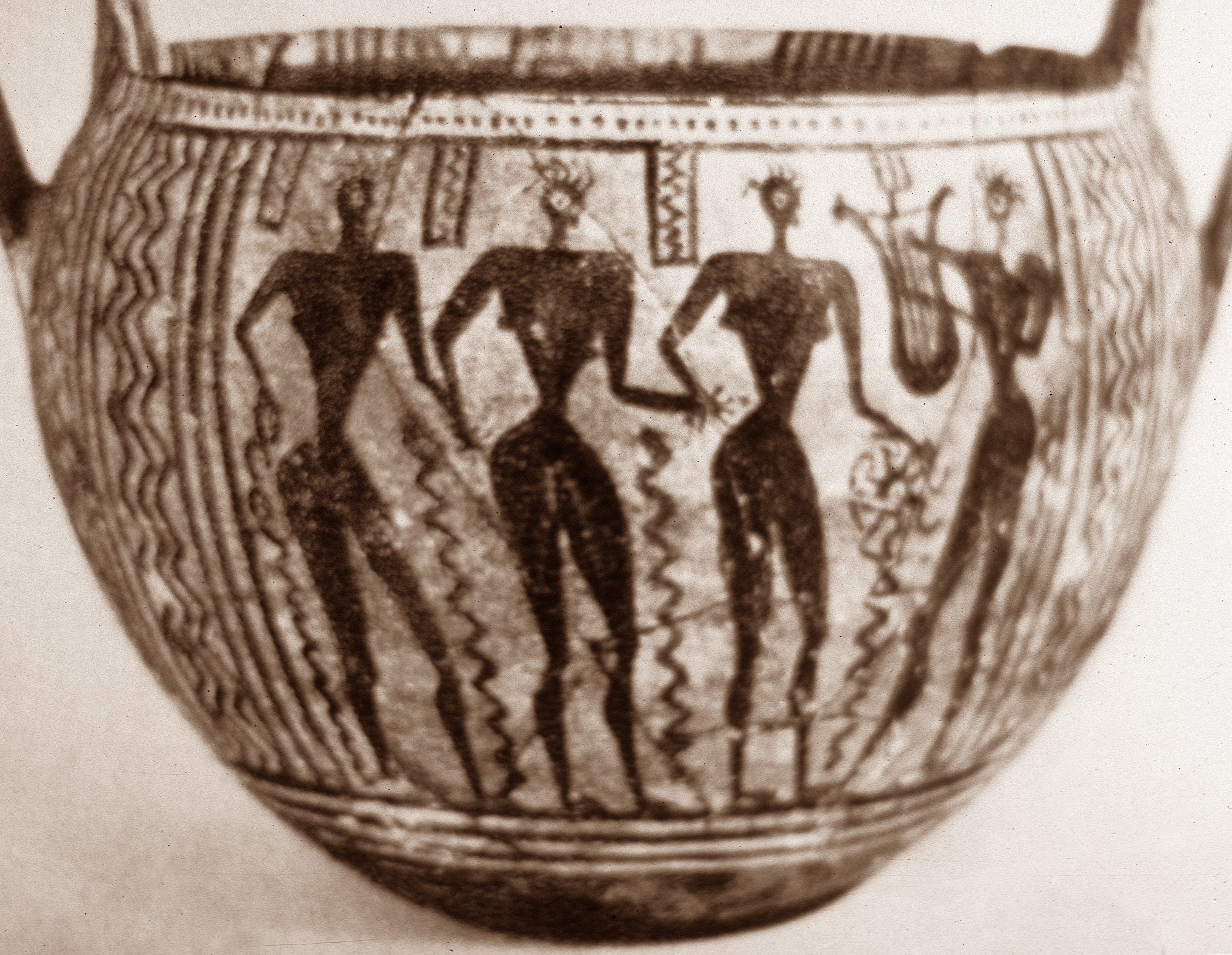
Here’s another of women dancing, this time naked, with snakes rising between them. (These snake squiggles are a frequent pattern in Geometric Greek amphora painting.)
You must be logged in to post a comment.